
How to Improve Sliding Glass Door Security
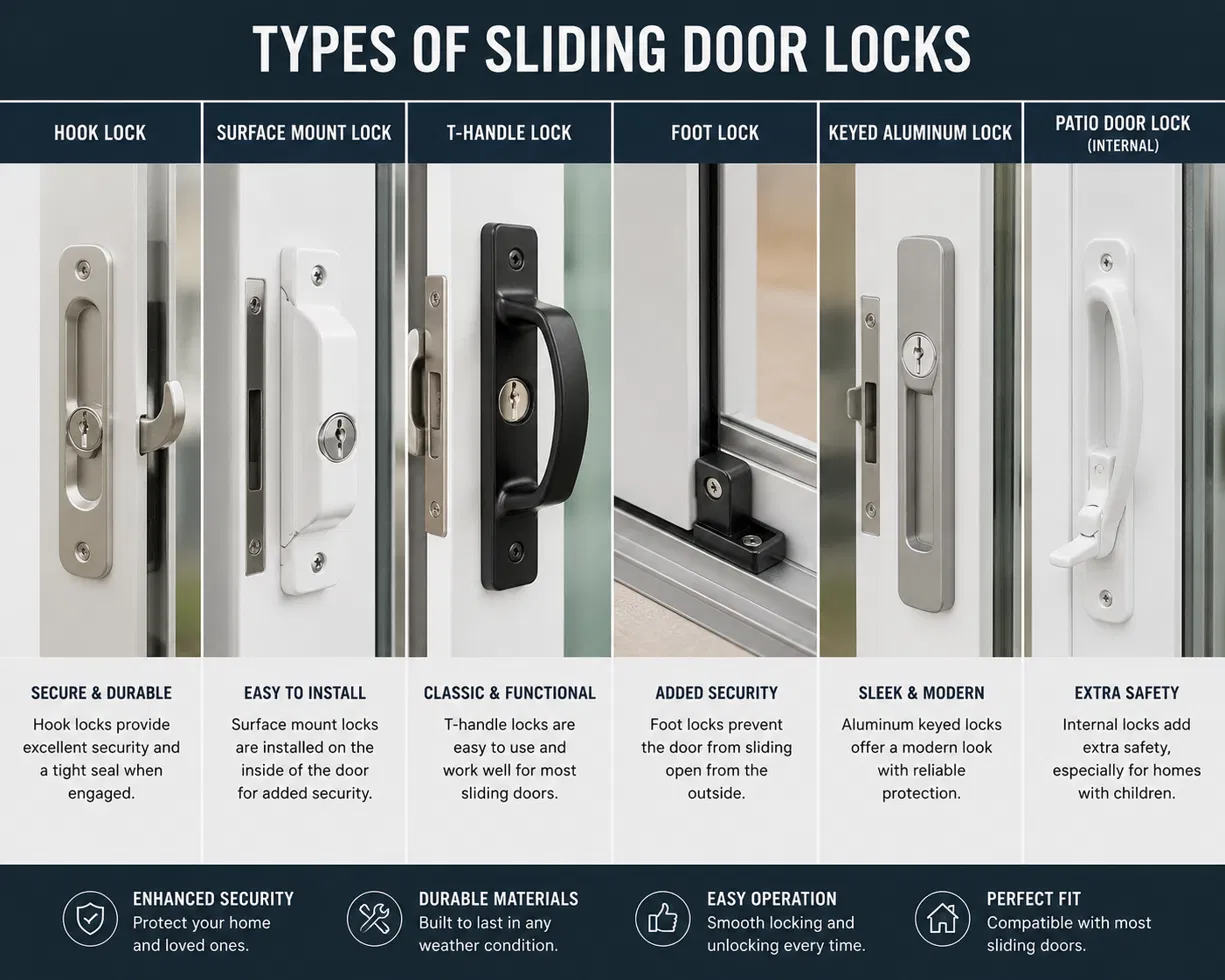
Sliding door security starts with basic mechanical condition. A sophisticated auxiliary lock cannot compensate for a panel that does not close fully, a keeper held by loose screws or rollers that let the door lift out of alignment.
Security inspection checklist
- Door closes completely without force
- Panel meets the jamb evenly
- Mortise latch engages fully
- Keeper is secure and correctly positioned
- Handles and fasteners are tight
- Stationary panel retainers are intact
- Anti-lift features are present and adjusted as designed
- Glass and frame show no visible damage
Secondary measures
A properly sized track bar, compatible secondary lock or alarm sensor may add another layer. Devices must not block required egress, damage drainage systems or prevent the door from interlocking.
Avoid shortcuts
Random screws in the top track can interfere with travel, penetrate unintended areas or leave insufficient panel engagement. A cut piece of wood may serve as a basic bar only if it fits properly and cannot become a trip or egress hazard.
Lighting and habits
Exterior lighting, closed blinds when away, trimmed landscaping and consistent locking also contribute. Security is layered; hardware repair is one part.
If your sliding door does not lock reliably, call WeFix Sliding Doors at 904-479-6747.
Frequently Asked Questions
Does a security bar replace the mortise lock?
It should be considered supplemental, not a reason to leave failed original hardware unrepaired.
Why can my locked door still move?
The latch may not fully engage, the keeper may be loose or the panel may be misaligned.
Can anti-lift devices stop normal opening?
Incorrect adjustment can create binding. They must preserve required operating clearance.
Sliding door giving you trouble?
Call WeFix Sliding Doors at 904-479-6747 or request an estimate. We repair first and replace only when necessary, across Jacksonville and Northeast Florida.
Request an estimate